The following is reposted from Spark Climate Insights, a Substack dedicated to providing insights from leading scientists and experts into major untapped opportunities to cut pollution and reduce climate risks. This inaugural post is authored by our Chief Scientist, Phil Duffy, who joined Spark in 2024 after three years as Climate Science Advisor in the Biden White House. You can read the post on Substack and subscribe to the channel to catch all of the insights here.
Four years ago, my co-founders and I decided to start a different kind of climate organization. We saw that achieving a safe and stable climate would require more tools than we have available today. Even as critical progress continues on solar and other fronts, there are major looming risks—like certain climate feedbacks—that still aren’t well understood; large emission sources—like agriculture—that still face big technical and policy barriers; and non-CO2 greenhouse gases—like methane and nitrous oxide—that offer untapped opportunities and under-explored risks. The tough reality of the current climate position is that we will need to pull multiple levers to have any chance of these efforts collectively being enough. The unsolved gaps are large enough to significantly impact our climate trajectory but aren’t getting enough attention to develop the solutions needed to bring them under control. We decided to create a science-driven organization—Spark—to help change that.
This inaugural Substack is authored by our Chief Scientist, Phil Duffy, who joined us in 2024 after three years as Climate Science Advisor in the Biden White House. Having spent his career working at the intersection of climate science and policy, Phil brings deep insights on the climate risks ahead and the strategies needed to manage them. This Substack will be a joint publishing platform for a rotating cast of scientists, policy experts, and innovators working at the frontier of climate science and solutions. We hope that these insights will broaden the climate conversation, and spark discussion and new ideas. We look forward to your feedback.
Philip B. Duffy, Chief Scientist, Spark Climate Solutions
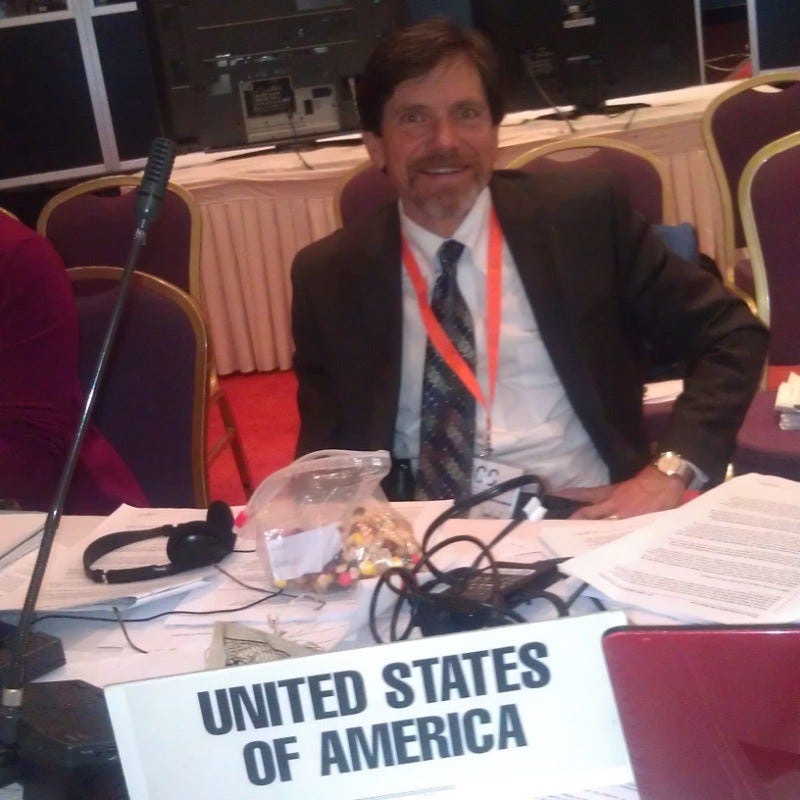
During three years in the Biden White House, I had the opportunity to contribute to the development and implementation of the most ambitious federal climate agenda ever. Through legislation, executive action, and private sector partnerships, we set in motion processes that would have dramatically cut US emissions, and we used the credibility that gave us to encourage other nations to take similarly ambitious steps.
Even before the abrupt reversal by Trump 2.0, however, my most recent White House stint highlighted for me some really important gaps in US and global climate actions: important sources of emissions and potentially important physical risks that we weren’t addressing adequately or even measuring well. Agriculture, for example, is an important and growing source of greenhouse gas emissions, yet I saw little acknowledgment of that and few resources dedicated to finding ways to cut those emissions at the speed and scale required. Similarly, warming-induced emissions from natural processes, e.g. thawing permafrost, warming wetlands, and burning forests, were an emerging concern among scientists, but received few resources and were largely ignored in the policy world. (More on this below).
And while it is natural and appropriate to highlight good news and progress, I also saw in the Biden administration, and still see more broadly, reluctance to recognize the scope and scale of the risks and challenges we face.
Here’s how I see the current situation:
Emissions are growing: Although global emissions of carbon dioxide (CO2) seem to be leveling off, they are still increasing, and new developments like AI growth and political reprioritization will tend to push them up. Net-zero is a long way off, at best, and until we get there, CO2-induced warming will continue to grow. Similarly, human emissions of methane are growing, and we lack comprehensive solutions for emissions from the biggest sector (agriculture).
Amplifying feedbacks are emerging: There is evidence that climate warming itself is starting to drive significant new emissions from natural processes. These warming-induced emissions add to human emissions and amplify warming. These emissions are at best only partly included in climate models, however, so future projections tend to underestimate this potentially important contribution to warming. Furthermore, the climate policy world does not account for these emissions or recognize any steps taken to reduce them. (Spark is working to estimate these emissions and see them reflected in key policy and planning processes.)
Cloud changes are another potentially important amplifier of warming. Space-based observations show that reductions in cloud cover contribute to a strong planetary increase in absorbed solar radiation—substantially stronger than is seen in most models. This trend is partly a feedback to GHG emissions and partly due to cleanup of particulate pollution. (Natural variability plays a role but this is thought to be small.) Regardless of what is driving it, however, the observed 25-year increase in absorbed solar radiation is a powerful warming influence—roughly equal in terms of radiative forcing to all human CO2 emissions since 1750. Increased absorption of solar radiation has caused Earth’s energy imbalance—the net gain of energy by Earth from space and the fundamental driver of global warming—to more than double since 2000. This, too, is only partially captured in most climate models.
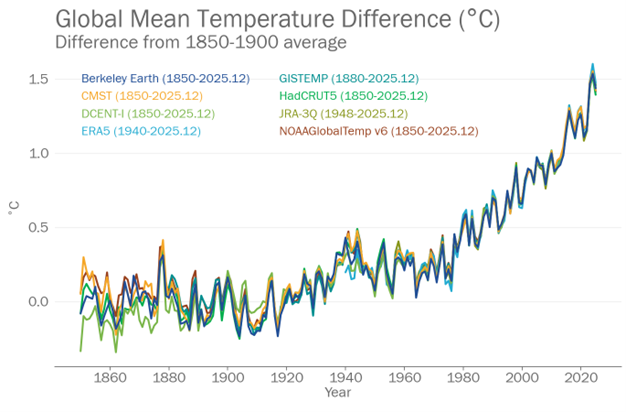
Warming is accelerating: The rapid increase in Earth’s energy imbalance is accelerating global warming. A recent study found that the global warming rate has accelerated from 0.2 to 0.35°C per decade. Earlier this year, the WMO released data showing that, averaged over eight temperature datasets, the 3-year warming level (2023 - 2025) was 1.48°C, which is well within the uncertainty range of the UNFCCC target of 1.5°C. We also know that particulate pollution is masking substantial additional warming—probably about 0.4°C. That means that even without any additional greenhouse gas emissions, we would probably come close to 1.9°C of warming as we continue to clean up particulate pollution.
So where does this leave us?
The UN recently conceded that we are going to overshoot 1.5°C. And it’s clear to me that we are going to overshoot 2°C of warming as well. The people who prognosticate these things estimate that we are currently on track for 2.5 or 3°C of warming. And that’s not accounting for all of the feedbacks I just mentioned, which are poorly captured in most climate models. And it may not fully reflect the effects of the recent widespread scaling back of mitigation ambition, or the effects of projected AI growth on GHG emissions.
What does that world—a 2.5 or 3°C world—look like? And what will it take to avoid that level of warming and reduce the risks we face?
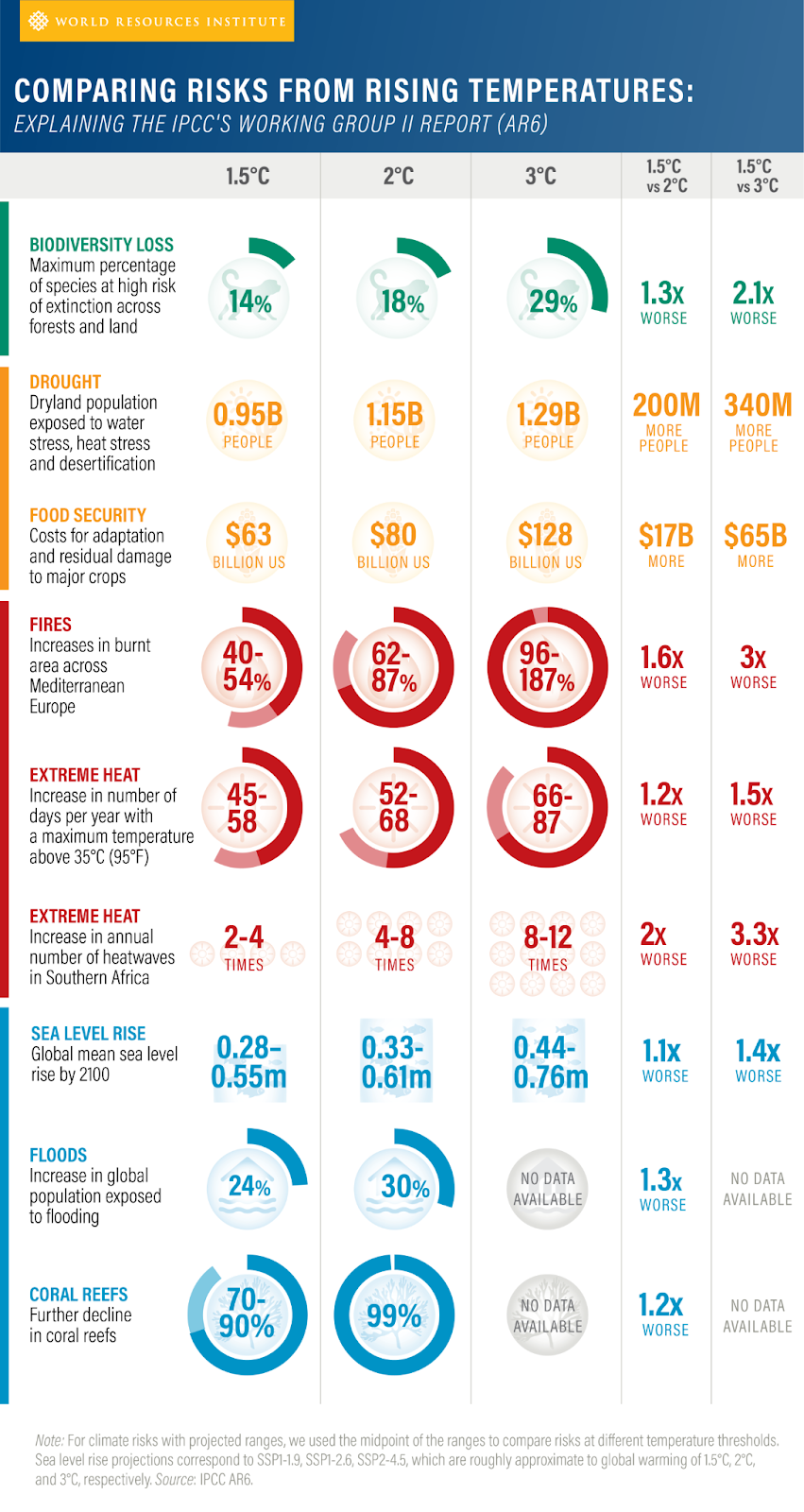
It depends on how well we prepare and how prosperous we are when we get there. But regardless, in a 2.5 or 3°C world we’re going to have to confront certain physical realities—or rather, they are going to confront us: deadly heat, drought, wildfire, flooding, stronger and more destructive hurricanes, rising seas. These effects, and their downstream influences on food and water scarcity, human health, and ecosystems, seem likely to result in large-scale migration, geopolitical stresses, and increases in violence at all scales. The table below, based on data from IPCC AR6, outlines estimates of how some key indicators of climate risks depend on global warming level.
So what should we be doing?
1. Aggressively deploy the mitigation solutions we have now. Solar, wind, and EVs work. Solar and wind are cheap, and EVs are getting cheaper (though trade barriers keep inexpensive models out of the U.S.). We should be doing all we can to scale up adoption of these and other ready technologies. This is especially true as AI adds to electricity demand and as geopolitical issues constrain the oil supply.
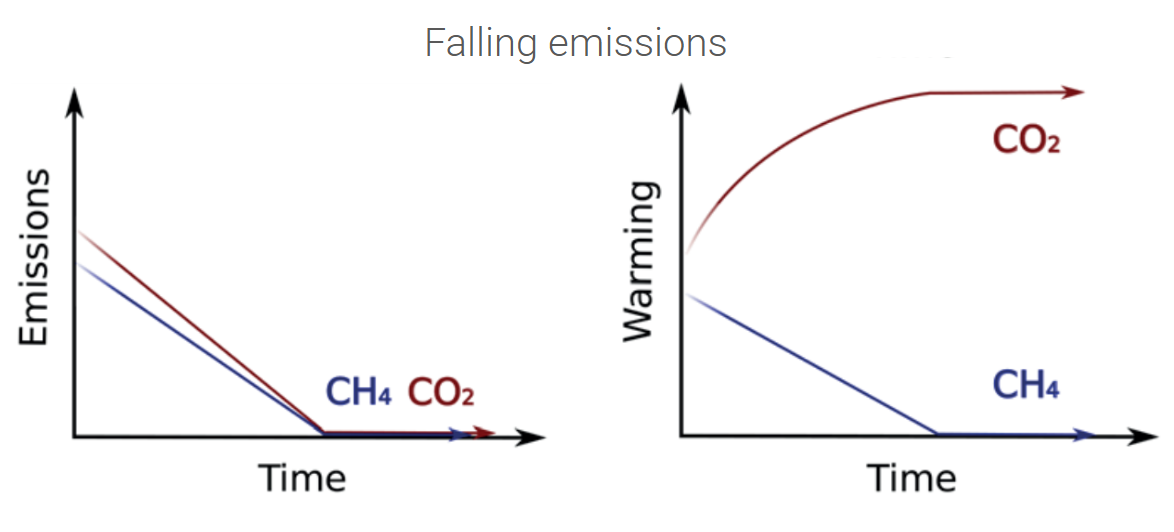
2. Mitigate short-lived pollutants like methane. This can limit near-term warming, which is critical for limiting the feedbacks noted above, and climate risks generally. In principle, aggressive mitigation of long-lived and short-lived GHGs together could begin to cool the planet without greenhouse gas removal. Cutting methane also provides important co-benefits like improved air quality–which saves lives. We currently have the tools to address about half of methane emissions. We need to deploy those, and develop solutions for the other half, particularly those from agriculture, the largest and hardest-to-abate human source. Despite growing interest, methane mitigation receives only a small fraction of climate funding, despite contributing about 30% of current warming.
3. Innovate new mitigation options. In the long run, stabilizing the climate will require eliminating nearly all emissions of long-lived GHGs, and stabilizing emissions of short-lived gases at low levels. It is a myth that we have in hand all the tools we need to do this. Important challenges remain in mitigating emissions from industry, transportation (e.g. aviation), and agriculture. As one example, nitrous oxide from agricultural fertilizer and manure could contribute 4.5 gigatons of CO₂e each year by 2100—more than the current annual emissions of every country except China and the U.S. We have solutions now for only a small fraction of those emissions.
4. Figure out how to scale carbon dioxide removal (CDR). CDR has to be part of the solution: there is simply too much CO2 already in the air to stabilize climate at an acceptable level of warming. This is extremely difficult, practical feasibility is still to be determined, and much more progress, and support for that progress, is needed. It is essential to keep investing in R&D and building the conditions that might eventually unlock faster progress.
5. Understand climate feedbacks, especially warming-induced emissions and declining planetary reflectivity, two areas noted above which Spark is working on. If we don’t understand how much these feedbacks will add to warming, we may set our emissions reductions targets with too little ambition and risk being unprepared for what’s coming. Shockingly, none of the 11 Earth system models used in the last IPCC assessment included warming-induced emissions from all three main sources: permafrost, wetlands, and wildfire (though five models included wildfire and two included permafrost). Scientists of course recognize the importance of these feedbacks, but the systems in question are not well observed, are difficult to model, and the research community working on this is small and underfunded. It’s a similar story for declining reflectivity. These problems are treated like mildly interesting academic research questions, instead of risks with potentially trillion-dollar implications for humanity.
6. Finally, we need to look at the possibility of expanding the toolkit. This means developing new mitigation solutions for hard-to-abate sources, like agriculture, industry, and aviation, and focusing more on non-CO2 gases, like methane and nitrous oxide; it also means researching whether there might be additional approaches to help bring down temperatures and stabilize the earth systems we depend on. This includes monitoring of at-risk earth systems like permafrost, the Atlantic overturning circulation (AMOC), ice sheets, coral reefs, and others; research into how these systems behave, how they are affected by climate change, and whether changes would be reversed by lowering temperatures; researching potential cooling technologies, like solar radiation modification, novel methods for CDR, and methane removal; and researching approaches which might help to stabilize specific at-risk systems like ice sheets, permafrost, forests, and coral reefs.
To be clear, I am opposed to deploying any of these interventions now (except maybe local surface albedo enhancements like painting roofs white–which have minimal broader impacts); but we urgently need to do the research—and explore the complex social and governance questions this work entails—to see if these things might be viable solutions. The central question today should not be whether to deploy stabilization or cooling measures, but whether the knowledge and monitoring systems to inform future decisions are being built. “Knowledge is good.”
Would this “distract from mitigation?” That argument was used to oppose adaptation, was used (and still is, though less frequently) to oppose methane mitigation, and is used to oppose even looking into some interventions. We have expanded the toolkit before, and we can do it again. We can walk and chew gum at the same time, and we have to. In fact, we have to chew several flavors of gum.
The prospect of 2.5 or 3°C of warming and potentially massive societal disruption is not pretty, but it is not inevitable, either. It’s the path we’re on, though, and the work that we’re all doing is to get us off that path, and onto a path towards a safe and stable climate and to a world where important earth systems and ecosystems are stable and thriving. Those conditions are foundational to future human well-being.
In future posts, we will feature commentary from other experts digging deeper into these topics and others as we explore why climate risks are accelerating and air different views on how we should respond.
You can read this post on Substack and subscribe to the channel to catch all of the insights here.
The following is reposted from Spark Climate Insights, a Substack dedicated to providing insights from leading scientists and experts into major untapped opportunities to cut pollution and reduce climate risks. This inaugural post is authored by our Chief Scientist, Phil Duffy, who joined Spark in 2024 after three years as Climate Science Advisor in the Biden White House. You can read the post on Substack and subscribe to the channel to catch all of the insights here.
Four years ago, my co-founders and I decided to start a different kind of climate organization. We saw that achieving a safe and stable climate would require more tools than we have available today. Even as critical progress continues on solar and other fronts, there are major looming risks—like certain climate feedbacks—that still aren’t well understood; large emission sources—like agriculture—that still face big technical and policy barriers; and non-CO2 greenhouse gases—like methane and nitrous oxide—that offer untapped opportunities and under-explored risks. The tough reality of the current climate position is that we will need to pull multiple levers to have any chance of these efforts collectively being enough. The unsolved gaps are large enough to significantly impact our climate trajectory but aren’t getting enough attention to develop the solutions needed to bring them under control. We decided to create a science-driven organization—Spark—to help change that.
This inaugural Substack is authored by our Chief Scientist, Phil Duffy, who joined us in 2024 after three years as Climate Science Advisor in the Biden White House. Having spent his career working at the intersection of climate science and policy, Phil brings deep insights on the climate risks ahead and the strategies needed to manage them. This Substack will be a joint publishing platform for a rotating cast of scientists, policy experts, and innovators working at the frontier of climate science and solutions. We hope that these insights will broaden the climate conversation, and spark discussion and new ideas. We look forward to your feedback.
Philip B. Duffy, Chief Scientist, Spark Climate Solutions
During three years in the Biden White House, I had the opportunity to contribute to the development and implementation of the most ambitious federal climate agenda ever. Through legislation, executive action, and private sector partnerships, we set in motion processes that would have dramatically cut US emissions, and we used the credibility that gave us to encourage other nations to take similarly ambitious steps.
Even before the abrupt reversal by Trump 2.0, however, my most recent White House stint highlighted for me some really important gaps in US and global climate actions: important sources of emissions and potentially important physical risks that we weren’t addressing adequately or even measuring well. Agriculture, for example, is an important and growing source of greenhouse gas emissions, yet I saw little acknowledgment of that and few resources dedicated to finding ways to cut those emissions at the speed and scale required. Similarly, warming-induced emissions from natural processes, e.g. thawing permafrost, warming wetlands, and burning forests, were an emerging concern among scientists, but received few resources and were largely ignored in the policy world. (More on this below).
And while it is natural and appropriate to highlight good news and progress, I also saw in the Biden administration, and still see more broadly, reluctance to recognize the scope and scale of the risks and challenges we face.
Here’s how I see the current situation:
Emissions are growing: Although global emissions of carbon dioxide (CO2) seem to be leveling off, they are still increasing, and new developments like AI growth and political reprioritization will tend to push them up. Net-zero is a long way off, at best, and until we get there, CO2-induced warming will continue to grow. Similarly, human emissions of methane are growing, and we lack comprehensive solutions for emissions from the biggest sector (agriculture).
Amplifying feedbacks are emerging: There is evidence that climate warming itself is starting to drive significant new emissions from natural processes. These warming-induced emissions add to human emissions and amplify warming. These emissions are at best only partly included in climate models, however, so future projections tend to underestimate this potentially important contribution to warming. Furthermore, the climate policy world does not account for these emissions or recognize any steps taken to reduce them. (Spark is working to estimate these emissions and see them reflected in key policy and planning processes.)
Cloud changes are another potentially important amplifier of warming. Space-based observations show that reductions in cloud cover contribute to a strong planetary increase in absorbed solar radiation—substantially stronger than is seen in most models. This trend is partly a feedback to GHG emissions and partly due to cleanup of particulate pollution. (Natural variability plays a role but this is thought to be small.) Regardless of what is driving it, however, the observed 25-year increase in absorbed solar radiation is a powerful warming influence—roughly equal in terms of radiative forcing to all human CO2 emissions since 1750. Increased absorption of solar radiation has caused Earth’s energy imbalance—the net gain of energy by Earth from space and the fundamental driver of global warming—to more than double since 2000. This, too, is only partially captured in most climate models.
Warming is accelerating: The rapid increase in Earth’s energy imbalance is accelerating global warming. A recent study found that the global warming rate has accelerated from 0.2 to 0.35°C per decade. Earlier this year, the WMO released data showing that, averaged over eight temperature datasets, the 3-year warming level (2023 - 2025) was 1.48°C, which is well within the uncertainty range of the UNFCCC target of 1.5°C. We also know that particulate pollution is masking substantial additional warming—probably about 0.4°C. That means that even without any additional greenhouse gas emissions, we would probably come close to 1.9°C of warming as we continue to clean up particulate pollution.
So where does this leave us?
The UN recently conceded that we are going to overshoot 1.5°C. And it’s clear to me that we are going to overshoot 2°C of warming as well. The people who prognosticate these things estimate that we are currently on track for 2.5 or 3°C of warming. And that’s not accounting for all of the feedbacks I just mentioned, which are poorly captured in most climate models. And it may not fully reflect the effects of the recent widespread scaling back of mitigation ambition, or the effects of projected AI growth on GHG emissions.
What does that world—a 2.5 or 3°C world—look like? And what will it take to avoid that level of warming and reduce the risks we face?
It depends on how well we prepare and how prosperous we are when we get there. But regardless, in a 2.5 or 3°C world we’re going to have to confront certain physical realities—or rather, they are going to confront us: deadly heat, drought, wildfire, flooding, stronger and more destructive hurricanes, rising seas. These effects, and their downstream influences on food and water scarcity, human health, and ecosystems, seem likely to result in large-scale migration, geopolitical stresses, and increases in violence at all scales. The table below, based on data from IPCC AR6, outlines estimates of how some key indicators of climate risks depend on global warming level.
So what should we be doing?
1. Aggressively deploy the mitigation solutions we have now. Solar, wind, and EVs work. Solar and wind are cheap, and EVs are getting cheaper (though trade barriers keep inexpensive models out of the U.S.). We should be doing all we can to scale up adoption of these and other ready technologies. This is especially true as AI adds to electricity demand and as geopolitical issues constrain the oil supply.
2. Mitigate short-lived pollutants like methane. This can limit near-term warming, which is critical for limiting the feedbacks noted above, and climate risks generally. In principle, aggressive mitigation of long-lived and short-lived GHGs together could begin to cool the planet without greenhouse gas removal. Cutting methane also provides important co-benefits like improved air quality–which saves lives. We currently have the tools to address about half of methane emissions. We need to deploy those, and develop solutions for the other half, particularly those from agriculture, the largest and hardest-to-abate human source. Despite growing interest, methane mitigation receives only a small fraction of climate funding, despite contributing about 30% of current warming.
3. Innovate new mitigation options. In the long run, stabilizing the climate will require eliminating nearly all emissions of long-lived GHGs, and stabilizing emissions of short-lived gases at low levels. It is a myth that we have in hand all the tools we need to do this. Important challenges remain in mitigating emissions from industry, transportation (e.g. aviation), and agriculture. As one example, nitrous oxide from agricultural fertilizer and manure could contribute 4.5 gigatons of CO₂e each year by 2100—more than the current annual emissions of every country except China and the U.S. We have solutions now for only a small fraction of those emissions.
4. Figure out how to scale carbon dioxide removal (CDR). CDR has to be part of the solution: there is simply too much CO2 already in the air to stabilize climate at an acceptable level of warming. This is extremely difficult, practical feasibility is still to be determined, and much more progress, and support for that progress, is needed. It is essential to keep investing in R&D and building the conditions that might eventually unlock faster progress.
5. Understand climate feedbacks, especially warming-induced emissions and declining planetary reflectivity, two areas noted above which Spark is working on. If we don’t understand how much these feedbacks will add to warming, we may set our emissions reductions targets with too little ambition and risk being unprepared for what’s coming. Shockingly, none of the 11 Earth system models used in the last IPCC assessment included warming-induced emissions from all three main sources: permafrost, wetlands, and wildfire (though five models included wildfire and two included permafrost). Scientists of course recognize the importance of these feedbacks, but the systems in question are not well observed, are difficult to model, and the research community working on this is small and underfunded. It’s a similar story for declining reflectivity. These problems are treated like mildly interesting academic research questions, instead of risks with potentially trillion-dollar implications for humanity.
6. Finally, we need to look at the possibility of expanding the toolkit. This means developing new mitigation solutions for hard-to-abate sources, like agriculture, industry, and aviation, and focusing more on non-CO2 gases, like methane and nitrous oxide; it also means researching whether there might be additional approaches to help bring down temperatures and stabilize the earth systems we depend on. This includes monitoring of at-risk earth systems like permafrost, the Atlantic overturning circulation (AMOC), ice sheets, coral reefs, and others; research into how these systems behave, how they are affected by climate change, and whether changes would be reversed by lowering temperatures; researching potential cooling technologies, like solar radiation modification, novel methods for CDR, and methane removal; and researching approaches which might help to stabilize specific at-risk systems like ice sheets, permafrost, forests, and coral reefs.
To be clear, I am opposed to deploying any of these interventions now (except maybe local surface albedo enhancements like painting roofs white–which have minimal broader impacts); but we urgently need to do the research—and explore the complex social and governance questions this work entails—to see if these things might be viable solutions. The central question today should not be whether to deploy stabilization or cooling measures, but whether the knowledge and monitoring systems to inform future decisions are being built. “Knowledge is good.”
Would this “distract from mitigation?” That argument was used to oppose adaptation, was used (and still is, though less frequently) to oppose methane mitigation, and is used to oppose even looking into some interventions. We have expanded the toolkit before, and we can do it again. We can walk and chew gum at the same time, and we have to. In fact, we have to chew several flavors of gum.
The prospect of 2.5 or 3°C of warming and potentially massive societal disruption is not pretty, but it is not inevitable, either. It’s the path we’re on, though, and the work that we’re all doing is to get us off that path, and onto a path towards a safe and stable climate and to a world where important earth systems and ecosystems are stable and thriving. Those conditions are foundational to future human well-being.
In future posts, we will feature commentary from other experts digging deeper into these topics and others as we explore why climate risks are accelerating and air different views on how we should respond.
You can read this post on Substack and subscribe to the channel to catch all of the insights here.
The following is reposted from Spark Climate Insights, a Substack dedicated to providing insights from leading scientists and experts into major untapped opportunities to cut pollution and reduce climate risks. This inaugural post is authored by our Chief Scientist, Phil Duffy, who joined Spark in 2024 after three years as Climate Science Advisor in the Biden White House. You can read the post on Substack and subscribe to the channel to catch all of the insights here.
Four years ago, my co-founders and I decided to start a different kind of climate organization. We saw that achieving a safe and stable climate would require more tools than we have available today. Even as critical progress continues on solar and other fronts, there are major looming risks—like certain climate feedbacks—that still aren’t well understood; large emission sources—like agriculture—that still face big technical and policy barriers; and non-CO2 greenhouse gases—like methane and nitrous oxide—that offer untapped opportunities and under-explored risks. The tough reality of the current climate position is that we will need to pull multiple levers to have any chance of these efforts collectively being enough. The unsolved gaps are large enough to significantly impact our climate trajectory but aren’t getting enough attention to develop the solutions needed to bring them under control. We decided to create a science-driven organization—Spark—to help change that.
This inaugural Substack is authored by our Chief Scientist, Phil Duffy, who joined us in 2024 after three years as Climate Science Advisor in the Biden White House. Having spent his career working at the intersection of climate science and policy, Phil brings deep insights on the climate risks ahead and the strategies needed to manage them. This Substack will be a joint publishing platform for a rotating cast of scientists, policy experts, and innovators working at the frontier of climate science and solutions. We hope that these insights will broaden the climate conversation, and spark discussion and new ideas. We look forward to your feedback.
Philip B. Duffy, Chief Scientist, Spark Climate Solutions
During three years in the Biden White House, I had the opportunity to contribute to the development and implementation of the most ambitious federal climate agenda ever. Through legislation, executive action, and private sector partnerships, we set in motion processes that would have dramatically cut US emissions, and we used the credibility that gave us to encourage other nations to take similarly ambitious steps.
Even before the abrupt reversal by Trump 2.0, however, my most recent White House stint highlighted for me some really important gaps in US and global climate actions: important sources of emissions and potentially important physical risks that we weren’t addressing adequately or even measuring well. Agriculture, for example, is an important and growing source of greenhouse gas emissions, yet I saw little acknowledgment of that and few resources dedicated to finding ways to cut those emissions at the speed and scale required. Similarly, warming-induced emissions from natural processes, e.g. thawing permafrost, warming wetlands, and burning forests, were an emerging concern among scientists, but received few resources and were largely ignored in the policy world. (More on this below).
And while it is natural and appropriate to highlight good news and progress, I also saw in the Biden administration, and still see more broadly, reluctance to recognize the scope and scale of the risks and challenges we face.
Here’s how I see the current situation:
Emissions are growing: Although global emissions of carbon dioxide (CO2) seem to be leveling off, they are still increasing, and new developments like AI growth and political reprioritization will tend to push them up. Net-zero is a long way off, at best, and until we get there, CO2-induced warming will continue to grow. Similarly, human emissions of methane are growing, and we lack comprehensive solutions for emissions from the biggest sector (agriculture).
Amplifying feedbacks are emerging: There is evidence that climate warming itself is starting to drive significant new emissions from natural processes. These warming-induced emissions add to human emissions and amplify warming. These emissions are at best only partly included in climate models, however, so future projections tend to underestimate this potentially important contribution to warming. Furthermore, the climate policy world does not account for these emissions or recognize any steps taken to reduce them. (Spark is working to estimate these emissions and see them reflected in key policy and planning processes.)
Cloud changes are another potentially important amplifier of warming. Space-based observations show that reductions in cloud cover contribute to a strong planetary increase in absorbed solar radiation—substantially stronger than is seen in most models. This trend is partly a feedback to GHG emissions and partly due to cleanup of particulate pollution. (Natural variability plays a role but this is thought to be small.) Regardless of what is driving it, however, the observed 25-year increase in absorbed solar radiation is a powerful warming influence—roughly equal in terms of radiative forcing to all human CO2 emissions since 1750. Increased absorption of solar radiation has caused Earth’s energy imbalance—the net gain of energy by Earth from space and the fundamental driver of global warming—to more than double since 2000. This, too, is only partially captured in most climate models.
Warming is accelerating: The rapid increase in Earth’s energy imbalance is accelerating global warming. A recent study found that the global warming rate has accelerated from 0.2 to 0.35°C per decade. Earlier this year, the WMO released data showing that, averaged over eight temperature datasets, the 3-year warming level (2023 - 2025) was 1.48°C, which is well within the uncertainty range of the UNFCCC target of 1.5°C. We also know that particulate pollution is masking substantial additional warming—probably about 0.4°C. That means that even without any additional greenhouse gas emissions, we would probably come close to 1.9°C of warming as we continue to clean up particulate pollution.
So where does this leave us?
The UN recently conceded that we are going to overshoot 1.5°C. And it’s clear to me that we are going to overshoot 2°C of warming as well. The people who prognosticate these things estimate that we are currently on track for 2.5 or 3°C of warming. And that’s not accounting for all of the feedbacks I just mentioned, which are poorly captured in most climate models. And it may not fully reflect the effects of the recent widespread scaling back of mitigation ambition, or the effects of projected AI growth on GHG emissions.
What does that world—a 2.5 or 3°C world—look like? And what will it take to avoid that level of warming and reduce the risks we face?
It depends on how well we prepare and how prosperous we are when we get there. But regardless, in a 2.5 or 3°C world we’re going to have to confront certain physical realities—or rather, they are going to confront us: deadly heat, drought, wildfire, flooding, stronger and more destructive hurricanes, rising seas. These effects, and their downstream influences on food and water scarcity, human health, and ecosystems, seem likely to result in large-scale migration, geopolitical stresses, and increases in violence at all scales. The table below, based on data from IPCC AR6, outlines estimates of how some key indicators of climate risks depend on global warming level.
So what should we be doing?
1. Aggressively deploy the mitigation solutions we have now. Solar, wind, and EVs work. Solar and wind are cheap, and EVs are getting cheaper (though trade barriers keep inexpensive models out of the U.S.). We should be doing all we can to scale up adoption of these and other ready technologies. This is especially true as AI adds to electricity demand and as geopolitical issues constrain the oil supply.
2. Mitigate short-lived pollutants like methane. This can limit near-term warming, which is critical for limiting the feedbacks noted above, and climate risks generally. In principle, aggressive mitigation of long-lived and short-lived GHGs together could begin to cool the planet without greenhouse gas removal. Cutting methane also provides important co-benefits like improved air quality–which saves lives. We currently have the tools to address about half of methane emissions. We need to deploy those, and develop solutions for the other half, particularly those from agriculture, the largest and hardest-to-abate human source. Despite growing interest, methane mitigation receives only a small fraction of climate funding, despite contributing about 30% of current warming.
3. Innovate new mitigation options. In the long run, stabilizing the climate will require eliminating nearly all emissions of long-lived GHGs, and stabilizing emissions of short-lived gases at low levels. It is a myth that we have in hand all the tools we need to do this. Important challenges remain in mitigating emissions from industry, transportation (e.g. aviation), and agriculture. As one example, nitrous oxide from agricultural fertilizer and manure could contribute 4.5 gigatons of CO₂e each year by 2100—more than the current annual emissions of every country except China and the U.S. We have solutions now for only a small fraction of those emissions.
4. Figure out how to scale carbon dioxide removal (CDR). CDR has to be part of the solution: there is simply too much CO2 already in the air to stabilize climate at an acceptable level of warming. This is extremely difficult, practical feasibility is still to be determined, and much more progress, and support for that progress, is needed. It is essential to keep investing in R&D and building the conditions that might eventually unlock faster progress.
5. Understand climate feedbacks, especially warming-induced emissions and declining planetary reflectivity, two areas noted above which Spark is working on. If we don’t understand how much these feedbacks will add to warming, we may set our emissions reductions targets with too little ambition and risk being unprepared for what’s coming. Shockingly, none of the 11 Earth system models used in the last IPCC assessment included warming-induced emissions from all three main sources: permafrost, wetlands, and wildfire (though five models included wildfire and two included permafrost). Scientists of course recognize the importance of these feedbacks, but the systems in question are not well observed, are difficult to model, and the research community working on this is small and underfunded. It’s a similar story for declining reflectivity. These problems are treated like mildly interesting academic research questions, instead of risks with potentially trillion-dollar implications for humanity.
6. Finally, we need to look at the possibility of expanding the toolkit. This means developing new mitigation solutions for hard-to-abate sources, like agriculture, industry, and aviation, and focusing more on non-CO2 gases, like methane and nitrous oxide; it also means researching whether there might be additional approaches to help bring down temperatures and stabilize the earth systems we depend on. This includes monitoring of at-risk earth systems like permafrost, the Atlantic overturning circulation (AMOC), ice sheets, coral reefs, and others; research into how these systems behave, how they are affected by climate change, and whether changes would be reversed by lowering temperatures; researching potential cooling technologies, like solar radiation modification, novel methods for CDR, and methane removal; and researching approaches which might help to stabilize specific at-risk systems like ice sheets, permafrost, forests, and coral reefs.
To be clear, I am opposed to deploying any of these interventions now (except maybe local surface albedo enhancements like painting roofs white–which have minimal broader impacts); but we urgently need to do the research—and explore the complex social and governance questions this work entails—to see if these things might be viable solutions. The central question today should not be whether to deploy stabilization or cooling measures, but whether the knowledge and monitoring systems to inform future decisions are being built. “Knowledge is good.”
Would this “distract from mitigation?” That argument was used to oppose adaptation, was used (and still is, though less frequently) to oppose methane mitigation, and is used to oppose even looking into some interventions. We have expanded the toolkit before, and we can do it again. We can walk and chew gum at the same time, and we have to. In fact, we have to chew several flavors of gum.
The prospect of 2.5 or 3°C of warming and potentially massive societal disruption is not pretty, but it is not inevitable, either. It’s the path we’re on, though, and the work that we’re all doing is to get us off that path, and onto a path towards a safe and stable climate and to a world where important earth systems and ecosystems are stable and thriving. Those conditions are foundational to future human well-being.
In future posts, we will feature commentary from other experts digging deeper into these topics and others as we explore why climate risks are accelerating and air different views on how we should respond.
You can read this post on Substack and subscribe to the channel to catch all of the insights here.
Stay in touch
Sign up to our Spark newsletter and stay updated!
Menu
Stay in touch
Sign up to our Spark newsletter and stay updated!